'Do not be afraid, just believe': First interview with new Chaldean Patriarch Amel Shamon Nona
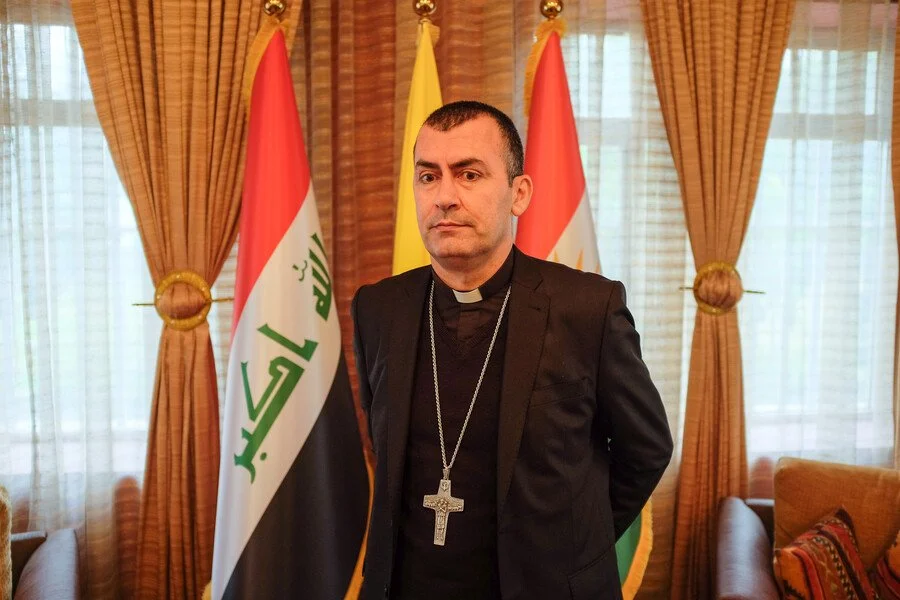
In 2015, the then Archbishop of Mosul left for Australia after his entire flock was exiled following the rise of the Islamic State. One decade later, he returns to Iraq, now as the newly elected Patriarch of the Chaldean Church.
On 29 May, His Beatitude Amel Shamon Nona will be officially installed at St Joseph’s Cathedral in Baghdad. Before returning to Iraq to lead the Chaldean Catholic Church, the newly elected Patriarch spoke with Aid to the Church in Need (ACN) about his journey from the frontlines of persecution in Mosul to the challenges of the global diaspora.
You were the Bishop of Mosul during one of the most painful periods in recent history, the occupation by the Islamic State, and lived through the exodus of your people and the violence that forced so many to leave their homes. How does that experience of suffering shape your vision as Chaldean Patriarch?
It was a very difficult but defining time. Being a bishop in a city in constant danger, where every week or month someone was killed, left a deep mark on me. But it also taught me that the faith of our people is their true anchor. Despite everything, they kept their hope alive. To suffer for being a faithful believer certainly deepens your way of looking at life. That is the best contribution of our people: they suffered immensely, yet they have this deep, unshakable belief that their lives must be full of faith and Christian principles. That is the hope I carry into this new mission.
You spent the past decade in Australia, leading the Chaldean diaspora there. How do you plan to bridge the gap between the Church in Iraq and those who have had to leave their homeland?
This is the great challenge of our time. The original home of our Church is in the Middle East, particularly in Iraq, but today the majority of our people live in the diaspora. Having lived both realities – the agony of Mosul and the life of a shepherd in Australia – I know it is not easy, but it is not impossible. My mission is to build a bridge, particularly for the new generations born abroad who are searching for their roots, their identity, and their faith.
You have chosen as motto: “Do not be afraid, just believe”. Why these specific words in such a turbulent time?
I believe the biggest challenge in the world today is fear – fear of the future, fear of losing our way of life, and fear of those around us. My motto is taken from Mark 5, when Jesus heals the daughter of Jairus. He does not just say: “Do not be afraid’, He adds “just believe”. That is an important nuance. We may have reasons to be afraid, but if we live our faith as the Lord wants, we can live with those fears while remaining full of faith. That is my belief for our people: we move forward not because the danger is gone, but because our belief is stronger.
In recent years, the Middle East has been the scene of recurring wars. As the new leader of the Chaldean Church, what message would you send to international community regarding the future of your region?
The desire of all of us is to see a Middle East at peace. We cannot accept that every year there is a new war in this or that country. The people in the Middle East, like everywhere else, want to live in serenity. What we ask of the international community is simply respect: respect for our peoples and for our sovereignty, so that we can live without the constant threat of war. We want to look at our young people and tell them: "you have a future," but for that, we need the world to stop turning our land into a constant battlefield.
As you prepare for your installation in Baghdad, what is your message to the young people who are torn between staying in Iraq or seeking a future elsewhere?
The land where we have lived for thousands of years is vital to our faith. I respect the personal choice of anyone who needs to live where they feel they can thrive, but I tell them: wherever you are, you have a mission. If you are in the Middle East, your way of achieving that mission is different from someone in the diaspora, but the goal is the same. Practice your faith, preach it through your actions, and live as the Lord wants. That is the basis of our life, regardless of our geography.
Looking ahead, how can organisations like ACN, who have stood by the Church in its darkest hours, support you in this new chapter?
I want to thank ACN from the bottom of my heart. When I was in Mosul between 2010 and 2014, in the midst of the most painful situations, ACN reached us when others could not. You helped us keep our community alive. For this new mission, I rely on your support, particularly for education and formation. If we have an educated generation that understands its faith, that is the best base for our people to stay and flourish. ACN has worked very well in the past, and I believe we will continue that vital work together to ensure that our people have a future and above all, that they have hope.
Support Our Mission
Help Christians in Need
We support projects in over 5,000 communities around the world in an effort to create a world in which Christianity can thrive. In 2025, we were able to support 5,368 projects in 141 countries worldwide.
Donate Now